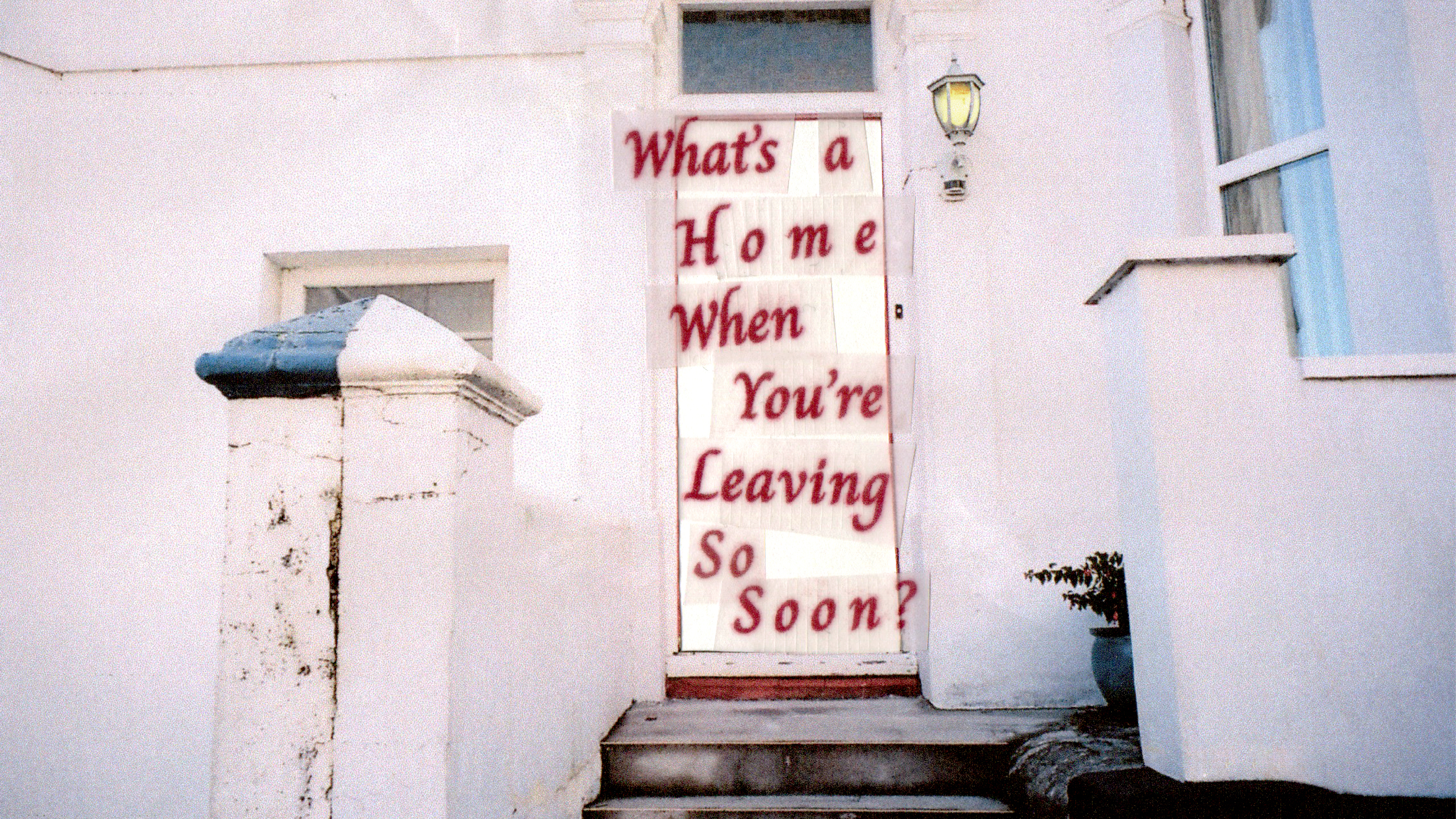
What’s a Home When You’re Leaving So Soon? features work by KARST volunteers, curated by Nis Murat.
The works on show explore what home means to the featured artists, uncovering how they find familiarity and refuge in disparate locations. The ephemerality of home, whether physical or psychological, shapes how we move through life. The show centres around each artist’s distinct sense of what it means to belong and how inclusion and acceptance can be found in times of uncertainty and instability.
“Home is in being here not having always been here, and being there but knowing you’ll leave soon. I found all those senses of home – of comfort, of safety, of belonging – not in a place but in the awareness that I, like you, like so many others, will always be torn between two, at least two. That I, just like you, learned to hold two separate and sometimes contradictory cultures in me – that I grew up in one but matured in the other.” Extract from Home is Other Immigrants by Majka Wankiewicz, Outhouse Magazine Issue 1
Join us to celebrate the opening of What’s a Home When You’re Leaving So Soon? And Jess Scott’s KARST x KIND Test Space on Friday 11 September, 6 – 8pm. Both exhibitions will be on view on the 11 & 12 September, 11pm – 5pm.
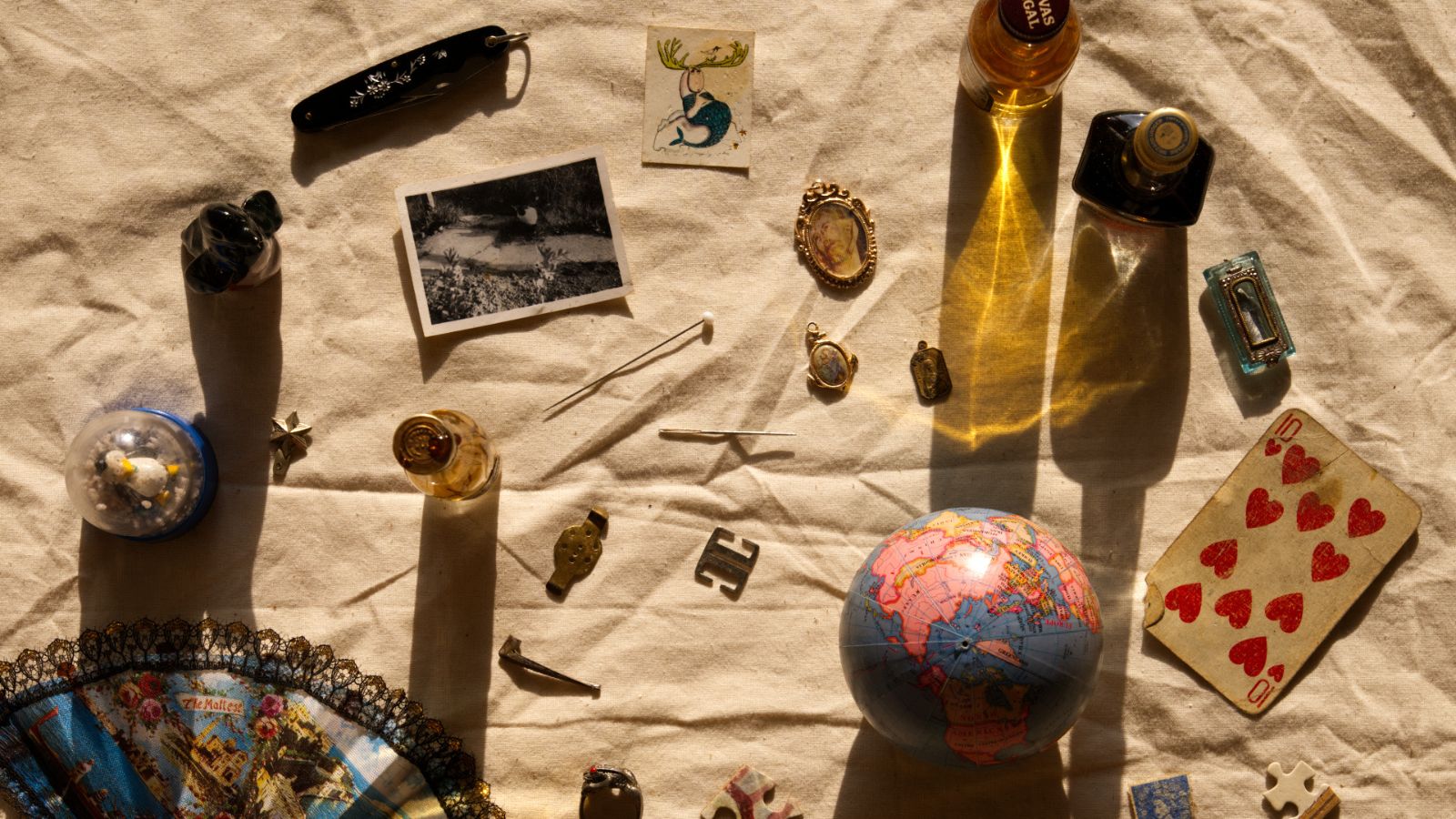
Jess Scott is an artist and filmmaker whose work is centred around the audience and rooted in the storytelling tradition. Experimenting with photography and film, Scott explores how we record and are recorded and how we view and are viewed, ideas that are integral to her practice. The artist’s work is often autobiographical, allowing her to observe her own place in the world whilst sharing personal experiences to create connections with her audience.
“I think that’s where I live, just under and behind my eyes” John Berger, A Fortunate Man: The Story of a Country Doctor
Inspired by John Berger’s A Fortunate Man, Scott explores where they exist in their own body and the intersection of identity, memory, and place. The show reflects on the artist’s experiences with their grandmother as she develops vascular dementia. Recently, their conversations have become shorter and places and timelines more muddled, almost as though her life has been turned on its end and is being viewed all at once. Scott also examines objects found in her family home when it emptied and returned to the council after 80 years.
Other aspects of the work explore the artist’s experience with neurodivergence and struggles with memory, taking inspiration from childhood memory games. While items and places from Scott’s past have been lost, others have been found and re-contextualised. Scott notes the destructive process of leaving a place, mirroring the process undertaken when creating a new place.
KARST x KIND is a long-standing collaboration with Studio KIND in Barnstaple, encouraging artistic collaboration across North Devon and Plymouth. I Think This is Where I Live
is the fourth solo show brought to Studio KIND by a KARST studioholder before going on to show at KARST. Previous KIND x KARST solo exhibitions include: Katy Richardson’s A Cake of Painted Tin (2022), Anna Boland’s SPY-nul (2025) and Tom Milnes’s SCANITAS (2026).
I Think This is Where I Live will be on view on 11 & 12 September (11am – 5pm). Join us on Friday 11 September for an in conversation with Jess Scott (5pm), followed by the opening event (6 – 8pm).

“Our Shadows Are Long” is a joint project between two community darkrooms: Fotohane in Turkey and Contact Darkroom in Totnes.
The show brings together images made by Fotohane’s students in Mardin, taken as part of their workshops with young people during which participants are encouraged to play and experiment freely. Alongside this work, they are showing photographs captured as part of a visit by Contact, along with a few extracts from a film about Fotohane and Mardin.
Their collaboration grew from a shared passion for photography and darkroom culture, and its power to move and empower people of all ages, especially young people. Serbest, one of Fotohane’s founders, is a Syrian refugee who began running workshops to help connect young refugees to the world around them.

KARST’s studio artists invite you to a sculptural test space at KARST.
Something speaks to you, as if from a great distance, of hidden structures; of what might or might not be there; of excess, compression, mass; of things that shouldn’t be inside you but are; of the subterranean and how to map it; of flesh and wet and pulp and pipe, fleece and rubber and plastic. One choice might lead you towards a threshold, another into a rift. Turn to the page of your choosing.
INSIDE UFO is the result of two peer-led residencies conducted by Anna Boland, Laura Hopes, Tom Pether, and Laura Robertson. The artists coined the term Unidentified Familiar Objects, or UFOs, to describe the found materials at the heart of their practice. Their shared aesthetic favours material interest over polite redaction. The work is maximal and unpolished.
The exhibition takes its name from Edward Packard’s 1982 choose your own adventure book Inside UFO 54-40, in which the reader is invited to search for Ultima, a fabled planet of paradise. Ultima can only be reached by accident — by stumbling across a page the book will never navigate you to. The book carries a special warning: “No one can get there by making choices or following instructions. There is one way to reach Ultima. Maybe you’ll find it.”
The show will be opening on Thursday 14 May, 5.30 – 7.30pm. Join the artists on Saturday 16 May, 12pm – 1pm, for a discussion panel in KARST’s FENSTER project space.

Recent graduates, Charlotte Henry-Stumpe (Arts University Plymouth) and Lily Maddocks (Bath Spa University), present work they have developed during their six month residency at KARST.
Charlotte Henry-Stumpe draws together scrapstore textile artifacts to create costumes of emboldenment, identity markers and acts of resistance against the quiet violences inherited within local communities. Henry-Stumpe attempts to navigate a cultural backdrop in which the uncertainty of changing community identity has been met with obsessive national pride. The high-vis workwear featured in her work embodies shared experiences, whilst the repeated flag imagery represents something more sinister. By disrupting these homogenised, mass-produced fabrics, she hopes to make obsolete their attached norms and imagines how they could be re-made, re-worn and passed on as local history or myth.
Lily Maddocks uses her practice to engage with and respond to her environment, working directly with materials collected during time spent outdoors. Using found and foraged earth pigments, Lily forms a connection between location, method and material, working closely with the ground. Her work in Test Space displays a growing body of pigments she has collected over the past five months during her residency at KARST. These pigments represent multiple areas across the South West, from the north coast of Somerset to Dartmoor and the south coast of Devon.
Opening Event:
27 February, 5.30 – 7.30pm
Artists in conversation with KARST’s Head of Programme, Ben Borthwick:
28 February, 12 – 1pm
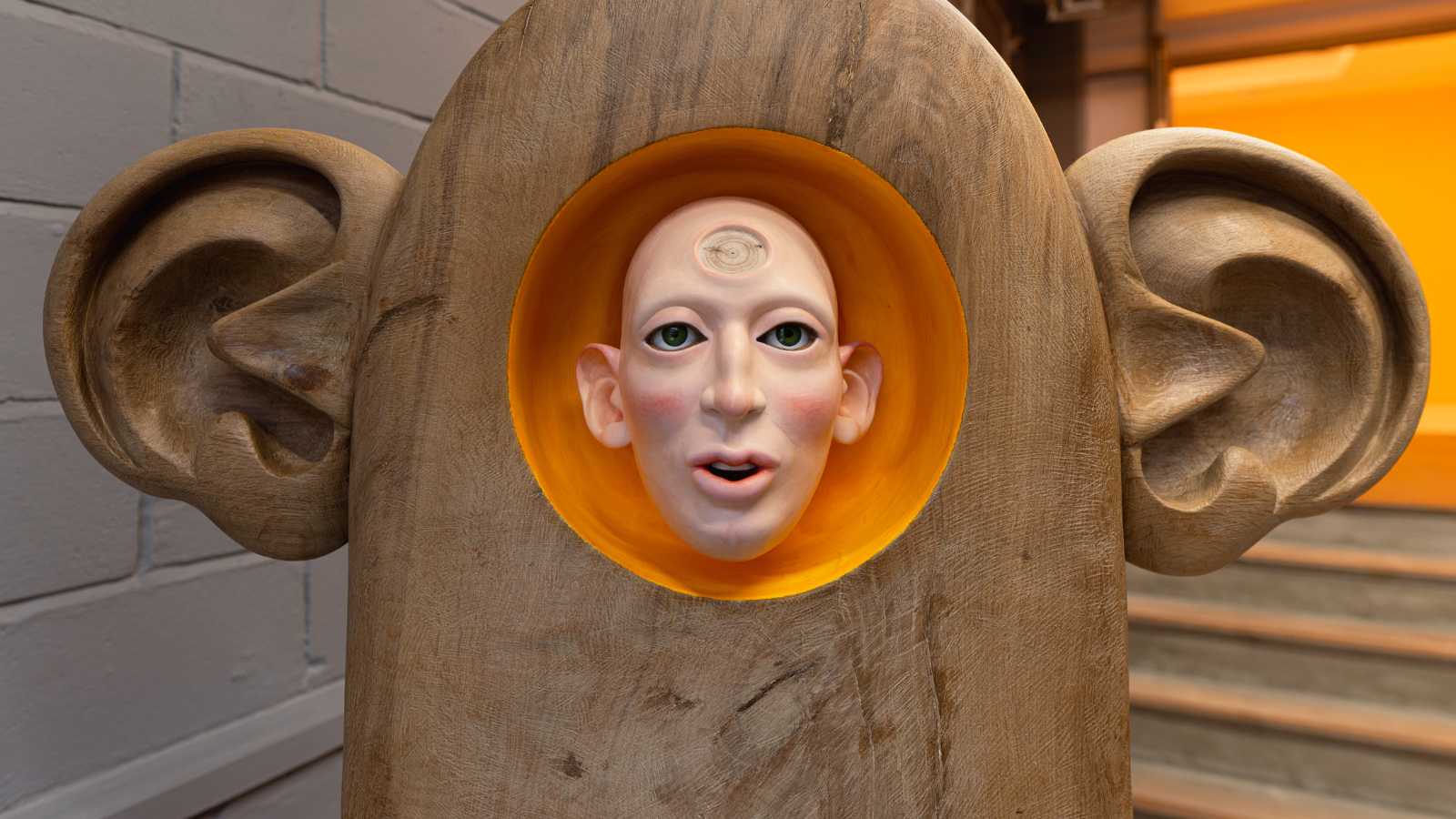
Doorway Guardians is a year-long collaborative project between KARST, Matt’s Gallery and Flatland Projects, comprising a series of three large woodcarvings by Annie Whiles. The sculptures – Attendant, Minder and Sentinel – combine the imagery and culture of British seaside destinations with the media and methods of painted medieval religious carvings, while echoing the artist’s memories of molded- plastic charity collection boxes of the 1960s and ‘70s.
The sculptures are designed to stand in the entranceways and thoroughfares of gallery buildings. Their role as divine attendants is to be preoccupied but open, listening and on watch, to be touched. Eccentric and idiosyncratic, Whiles’ work combines highly accomplished technical skill with cheeky humour. There is often more than meets the eye – hidden elements and surprises are there for those who look.
Throughout 2026, different Guardians will simultaneously occupy entrance spaces at Matt’s Gallery in London, Flatland Projects in Bexhill-on-Sea and KARST in Plymouth. They will be rotated and exchanged, setting up an evolving series of encounters for visitors at all three venues. Collaboration between public arts organisations across the UK is central to the project, with the Guardians taking on a civic role that encourages a sense of public ownership. A spirit of cooperation is embodied through touring and sharing the work.
Doorway Guardians was developed by Annie Whiles with support from an Arts Council England Developing Your Creative Practice grant and Goldsmiths, University of London. The exhibition is developed in partnership between Matt’s Gallery, Flatland Projects and KARST, with support from the Henry Moore Foundation.
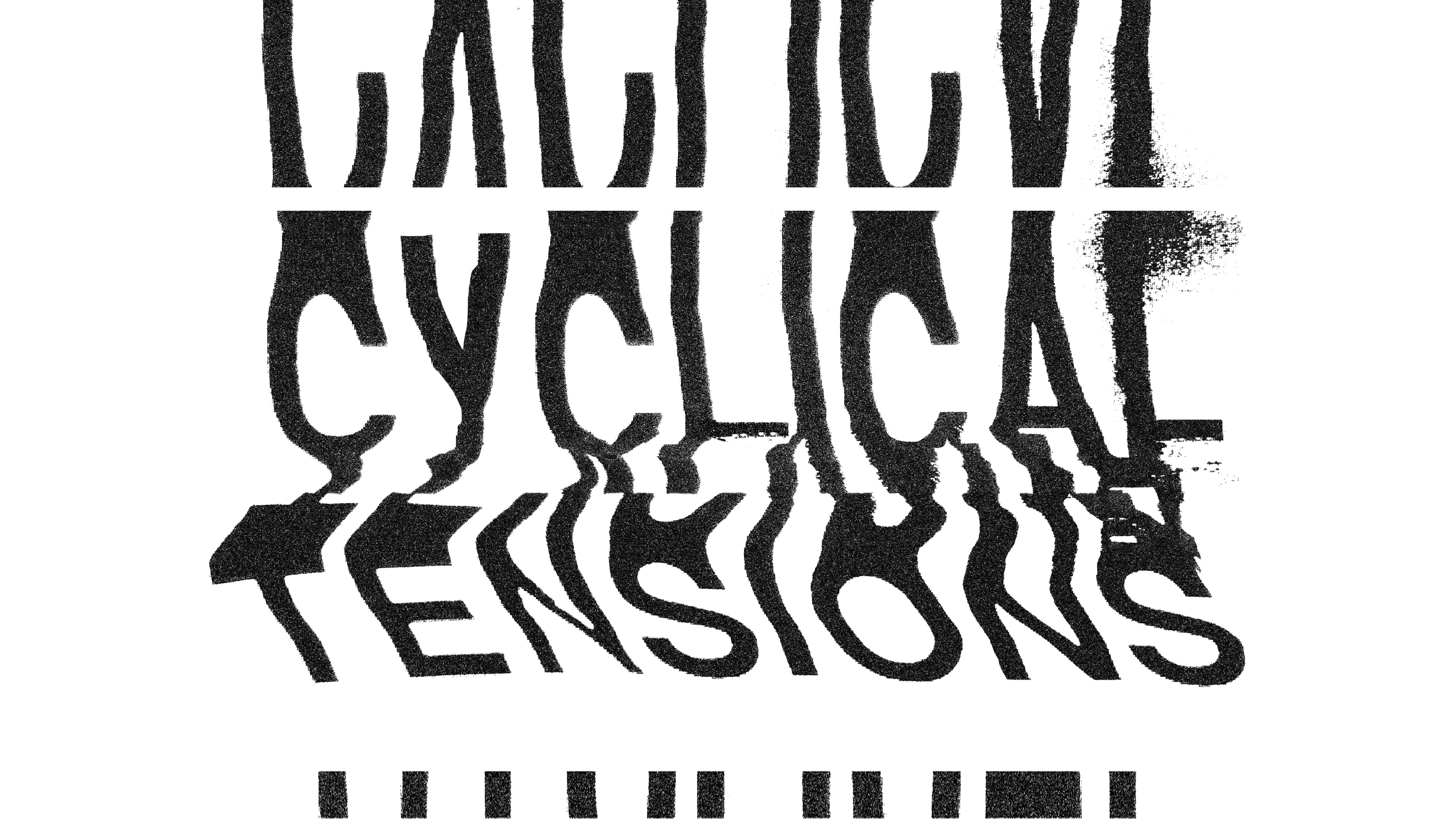
Cyclical Tensions is a show by KARST volunteers: AS•I•AM, Dana Aala, Elisa Margot Winters, Erica Luke, Flora Elford, Lucy Walker, Sarah Trotter, curated by Nis Murat.
The works articulate a collective inquiry into repetition, routine, and resistance, whether encountered intentionally or subconsciously, as both a strategy and a conceptual condition. Repetition here is never neutral: it generates tension. It does not promise stability; it exposes vulnerability and temporality. The works enact a resistant gesture against disappearance, inhabiting spaces where memory, process, and fragility continually press against one another.
This show is grounded in the notion that repetition is not static. Each iteration, each routine, each cycle bears the weight of contingency, sustaining a tension that accumulates between sameness and difference, stability and instability, revealing the strain on the efforts that strive to persist within them. What remains is not the perfect copy, but the unresolved resonance: the glitch, the stain, the hand, the horizon line drawn once more.
Opening Event: Friday 5 September, 6-8pm
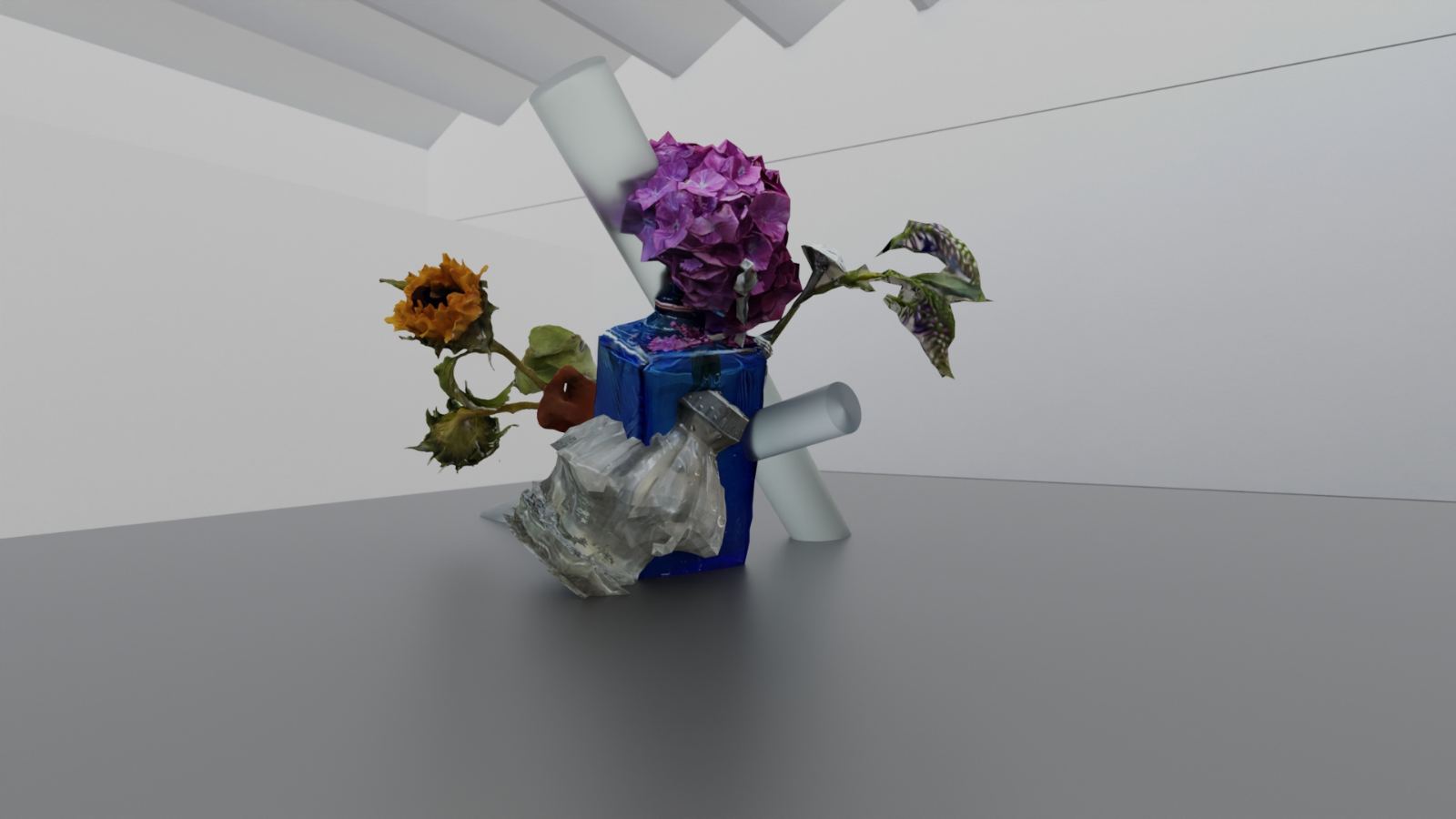
Following on from SCANITAS, Tom Milnes’ solo show at Studio KIND, SCANITAS:lab presents in-process experiments in 3D sculptural and 2D printed works that uncover the nature of 3D-scans and spatial imagery. Exploring the transience of three dimensional imaging methods through the laboratory format, works evolve within the gallery space – highlighting the technology’s limitations in its ability to capture form and space.
Through these evolving works, Milnes explores thematics of glitched still-life imagery as a contemporary take on 17th century Flemish ‘vanitas’ artworks. These works included objects such as exotic fruits in decaying states, precious metal and glass craftware, beautiful dying flowers, and skulls which hold a symbolic significance in their representation of the ephemerality of life. Vanitas works continue to hold high cultural significance – dealing with the duality of human transience whilst providing methods for revealing technological fallibility.
In SCANITAS:lab, the works produced use scans of objects reminiscent of those that appear in the original vanitas paintings. The photogrammetric technology employed by Milnes is confused by anything transparent, reflective, complex, repetitive, or patterned, so the objects appear glitched and indistinct as the image-making technology struggles to understand them. The resulting sculptures and images are warped and stretched, creating a contemporary vanitas to expose the fragility and temporality of both humanity and technology.
The 3D works are presented as paper sculptures using a technique known as Pepakura, a form of paper craft which takes a 3D model and creates printable, flat nets of the object that can be cut and folded to form a 3D paper sculpture. The printed 2D works include glitched 3D model images and 3D scan textures that create layered collage works; as well as pen-plotted images of 3D-scans and photographic fakes of sculptural works.
Opening Event
Friday 5 September, 6-8pm
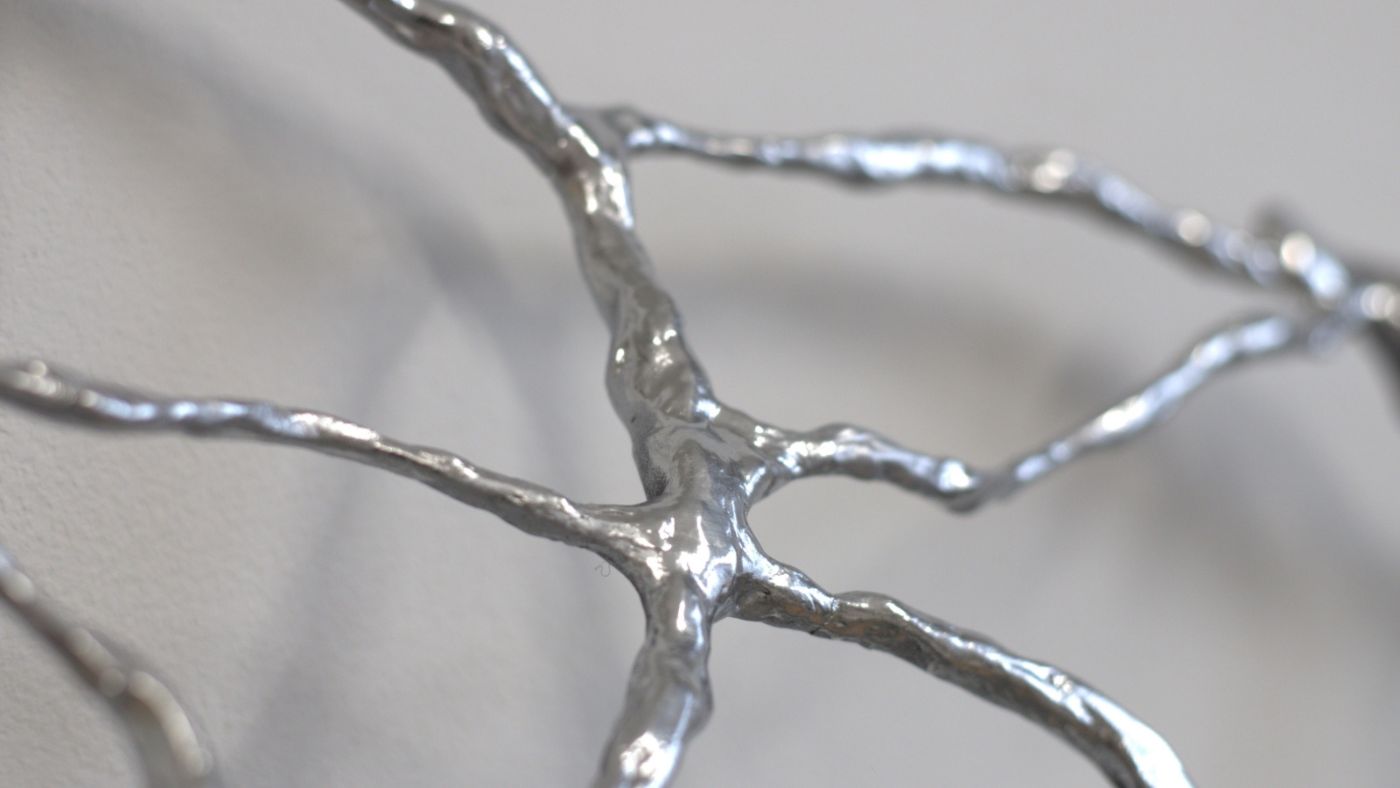
Recent graduates, Jemima Mansell (Arts University Plymouth) and Maisy Timney (Bath Spa University), present work they have developed during their six month residency at KARST.
In a society of increasing digital nativeness, Jemima Mansell’s practice explores the relationships we form with our immediate digital technology and the blurring of boundaries between human and non-human. Recently, her practice has consisted of sculptural, print and text-based works, exploring ontological ideas with a focus on the strange comfort technology can provide during periods of grief.
Maisy Timney’s paintings explore the tension between the painted surface and the pictorial image. Through layered colour fields, gestural marks and precise brushwork, Maisy creates compositions that balance movement with painterly structure and experiment with transparency and texture. Repetition plays a key role as a recurring motif, with marks emerging through deliberate, rehearsed techniques of applying paint.
Opening Event
Friday 28 February, 6-9pm
Artists in conversation with KARST Head of Programme Ben Borthwick
Saturday 8 March, 12-1pm
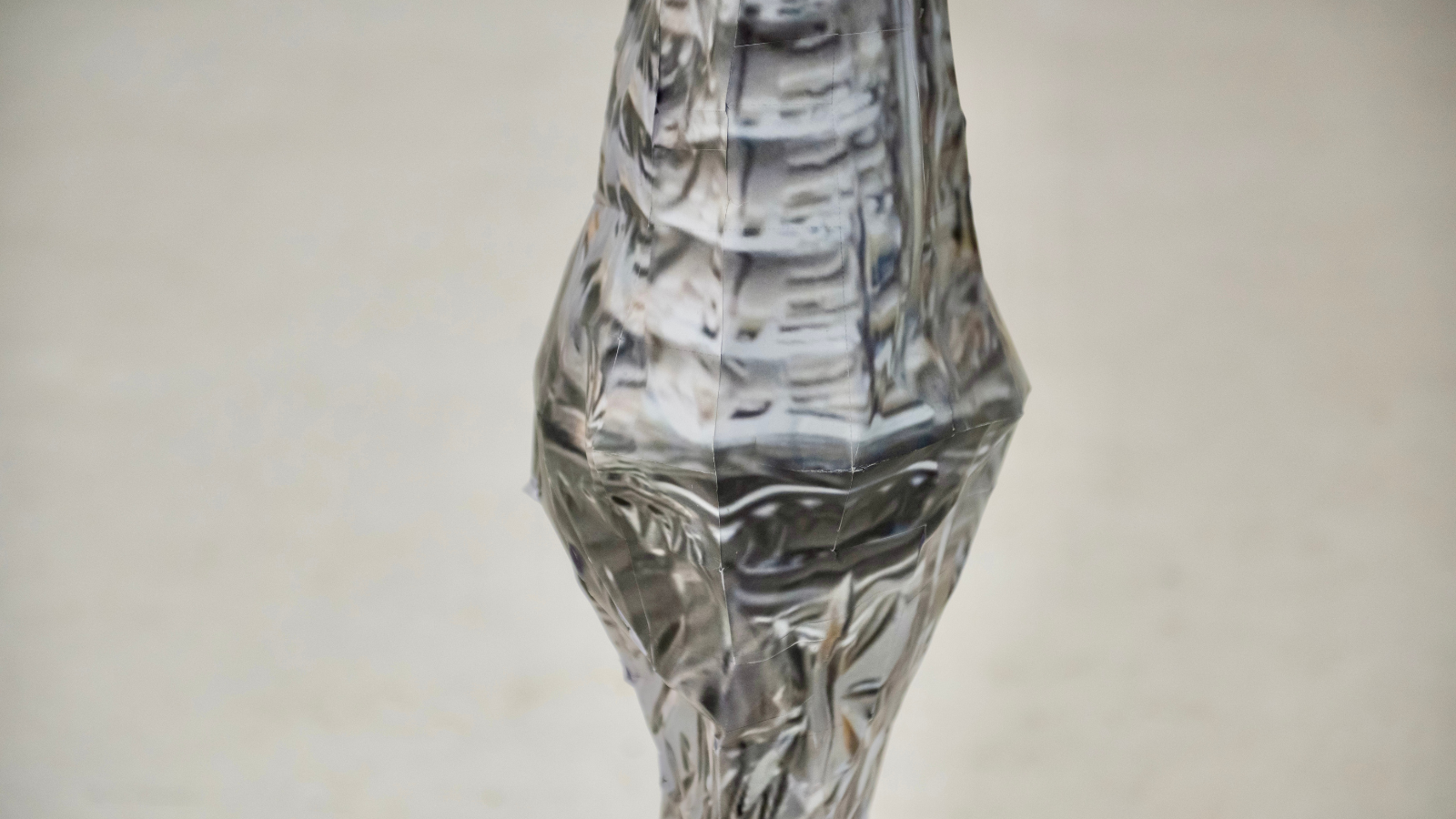
SCANITAS is an exhibition at Studio KIND. by KARST studio holder Tom Milnes. In this solo show, Tom Milnes displays a collection of 3D sculptural and 2D printed works exploring the thematics of glitched still-life images – a contemporary take on the ‘vanitas’ popular in 17th century Flemish painting.
Vanitas paintings focused on the symbolic impact of ‘vanity’ – in this context, referring to futility and pointlessness of material wealth. The objects depicted in vanitas (such as decaying, dying flowers, and skulls) often represent transient riches and the ephemerality of life. The Flemish vanitas works continue to hold high cultural significance today, providing methods for revealing technological fragility and pointlessness.
Tom Milnes is an artist, researcher, and curator. His practice explores the materiality of imagery and technology, engaging with the cultural impact of media through glitches, errors or hidden subcultures. Milnes has exhibited internationally including at: W139 – Amsterdam , AND/OR – London, CEAC – Xiamen, The Centre for Contemporary Art Laznia – Gdansk, and Gyeonggi International Biennale – Korea. He is the curator of the online platform Polygon Palm.
The private view at Studio KIND. will be on Friday 31 January (6-8pm) and the exhibition will be on view until Saturday 1 March. Click here to find out more.
KARST x KIND is an ongoing collaboration linking artists and organisations in North and South Devon. SCANITAS is the third annual exhibition at Studio KIND. by a KARST studio holder, following Katy Richardson’s exhibition A Cake of Painted Tin and Anna Boland’s exhibition SPY-nul.



